
A PLG Marketer’s Guide to Attribution

Sponsor Shoutout 🎉

This week’s newsletter is sponsored by Inflection.io, a modern marketing automation platform. Activate your product data and data warehouse to drive more pipeline, product adoption, and revenue expansion, all from one platform.
🚀 PLGTM is on the hunt for the top leaders across Marketing, Growth, Sales, MOPs, and Rev Ops! Nominate yourself or a standout colleague to be featured in our newsletter and on LinkedIn. Help us spotlight the rockstars driving PLG forward!
Attribution plays a crucial role in deciphering the complexities of growth. As companies strive to understand where their signups come from and which growth levers to pull, marketing attribution becomes an essential tool for analyzing conversion behavior and optimizing successful efforts.
Sarah Krasnik Bedell, Director of Growth Marketing at Prefect and a former data engineer, shared valuable insights into mastering attribution from her own experience of implementing multiple attribution models.
You can also watch the full session here 👇

Why Are We Talking About Attribution?
Knowing where your signups are coming from isn’t just about counting numbers; it’s about understanding the entire journey. Attribution allows you to see how various marketing efforts contribute to user acquisition, giving you the insight needed to optimize and streamline your strategies.
But the story doesn’t end there. Growth isn’t just about getting signups; it’s about knowing when and how to use your tools effectively. Think of your marketing tactics as levers—some need to be pulled early in the user journey, others later. Attribution shines light on which levers work best at different stages, helping you make the right moves at the right time to drive growth.
Consider user signups over time. Where are they coming from? Without attribution you see the results, but you can’t connect the dots. Attribution fills in those gaps, showing you which marketing efforts—be it a webinar, a social media campaign, or a paid ad—are driving those numbers.
At its core, marketing attribution helps you understand conversion behavior. By identifying which channels are driving conversions, you can focus on what works and refine or eliminate what doesn’t.
Implementation
Now that we’ve established the importance of attribution, let’s explore the implementation process, which constitutes a significant portion of successful attribution strategies while debunking some myths along the way.
Step 1: Event Tracking
The first step in attribution implementation is setting up event tracking. This involves configuring tools to emit web events like page views and button clicks, both on the frontend and backend.
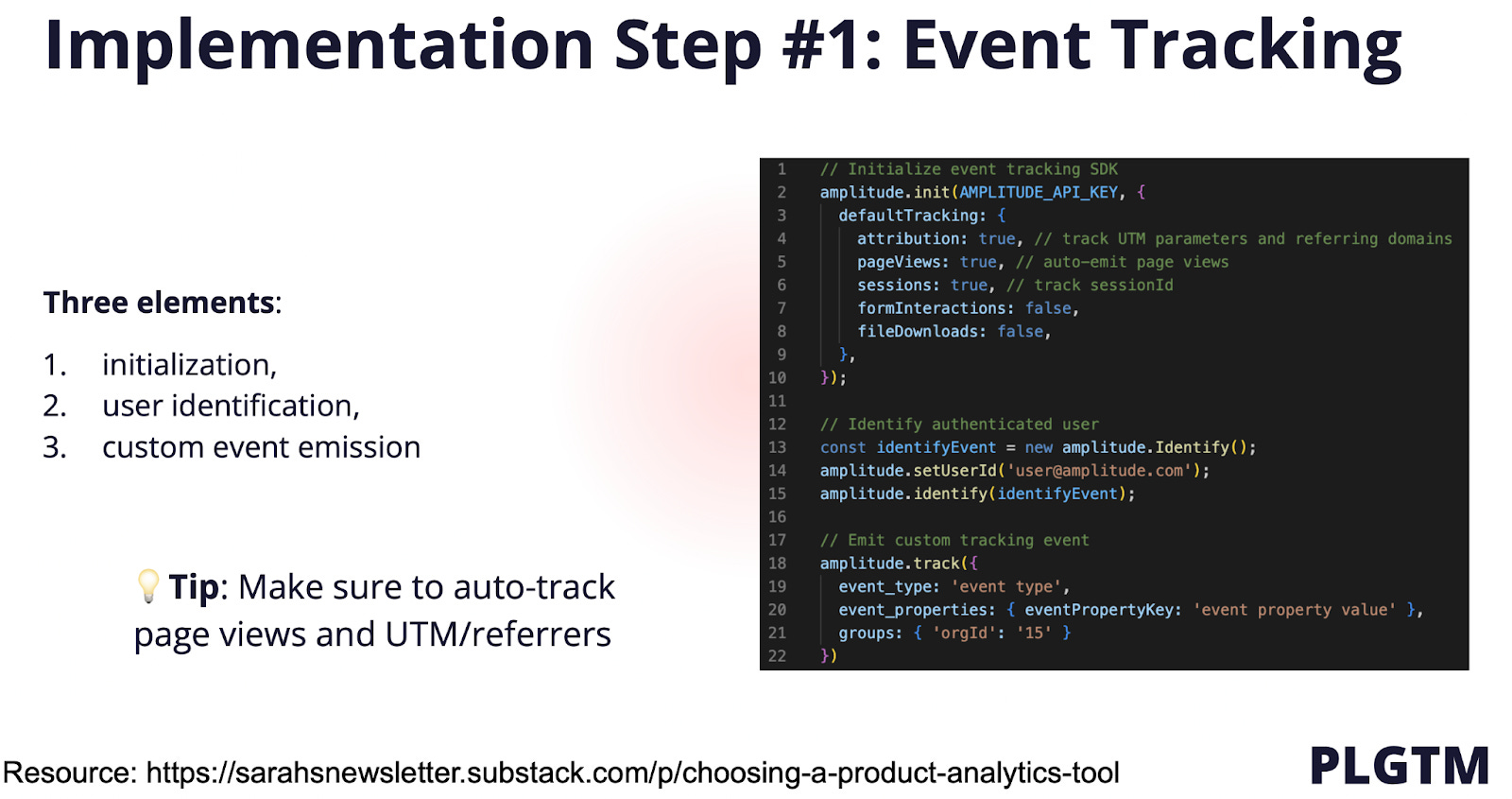
Initialization: Set up tracking tools.
User Identification: Track users across sessions.
Custom Event Emission: Monitor specific user actions.
💡 Tip: Ensure comprehensive data collection by auto-tracking page views and UTM parameters.
Myth #1: Ad-Blockers Are a Major Obstacle Ad blockers are not as widely used as we think. While cookie technology is evolving, it remains effective. Comparing these data sources shows that ad-blockers are less impactful than many believe. On average, 90.2% of user signups are still trackable with cookies.
💡 Tip: Make as many requests as possible first-party through a reverse proxy and be deliberate when choosing between client-side and server-side events.
Step 2: Identity Resolution
Identity resolution involves linking multiple online identities back to a single individual, which is crucial for accurate attribution.
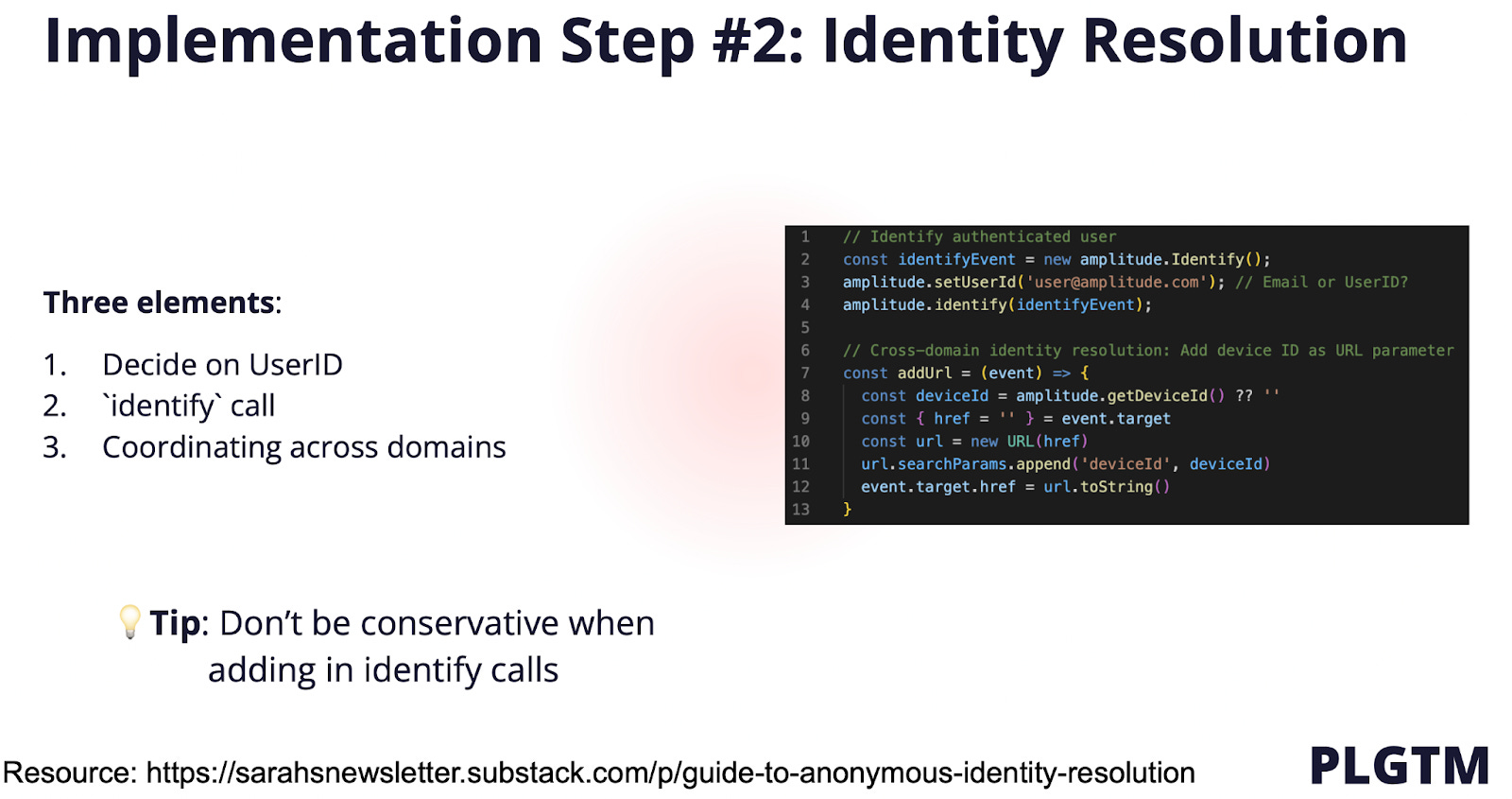
Decide on UserID: Establish a consistent identifier.
Identify Call: Implement across all touchpoints.
Coordinate Across Domains: Ensure consistent user identification across different domains.
💡 Tip: Don’t hesitate to increase identify calls; more data leads to more precise attribution.
Myth #2: Anonymous Data Suffices Relying solely on Google Analytics for conversion tracking isn’t enough. Proper identity resolution is essential for a complete understanding.
Myth #3: Complex Data Science Models Are Necessary You don’t need intricate data science models to begin with attribution. Simple models like first touch, last touch, or “ranked touch” can offer valuable insights.
Step 3: Attribution Logic
Attribution logic is about assigning credit for conversions using specific models:
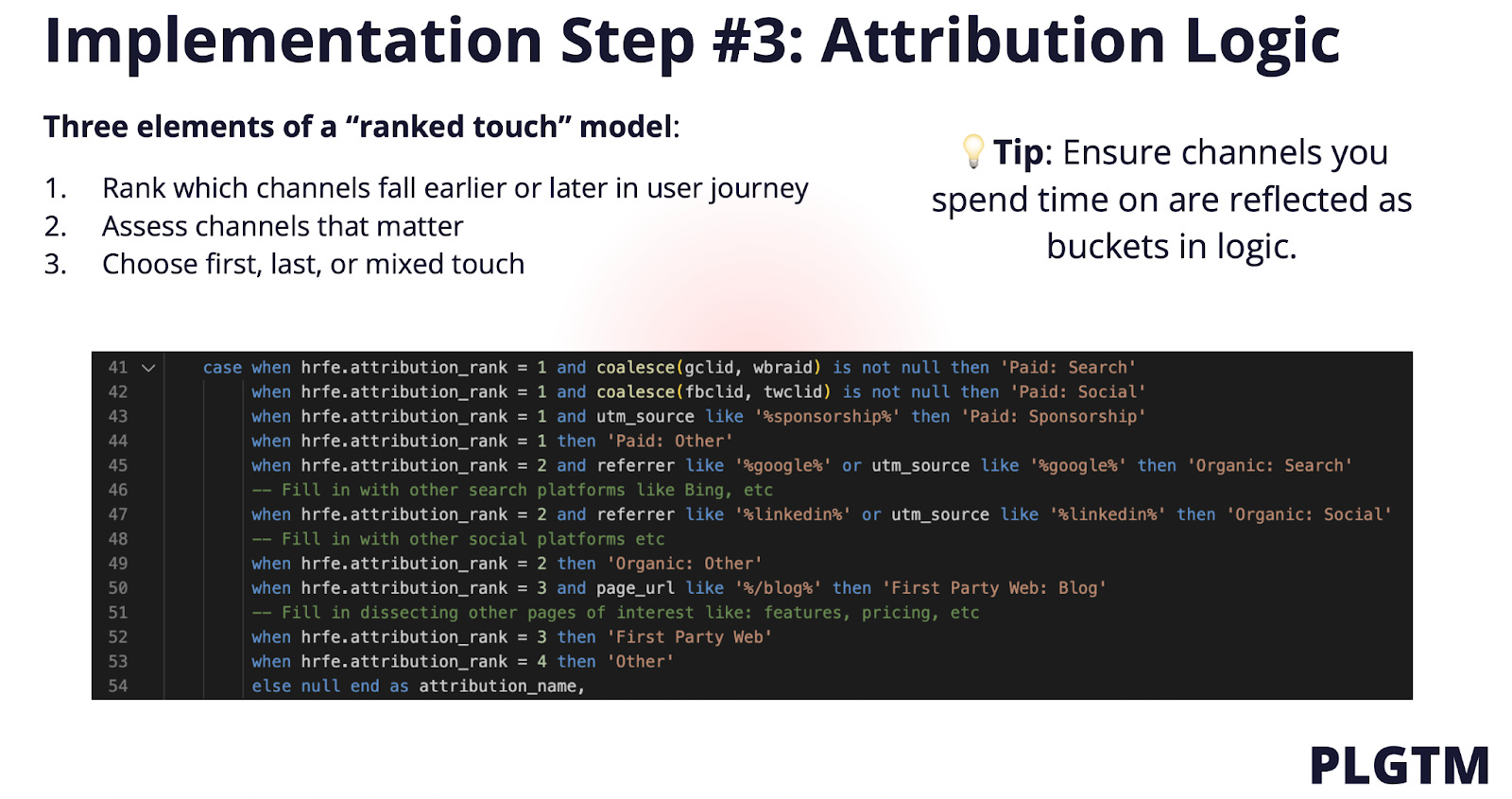
First/Last Touch Model: Attributes conversions to either the first or last interaction.
Ranked Touch Model: Assigns credit based on the priority of the touchpoint, such as giving precedence to paid interactions over organic ones.
💡 Tip: Ensure the channels you prioritize are represented as distinct categories in your attribution logic.
With the attribution logic in place, the next step is to establish robust reporting practices that will help you make sense of the data collected.
Reporting
Step 1: Identifying Conversions
When reporting on attribution, it’s crucial to pinpoint the key conversions you’re tracking. These might include:
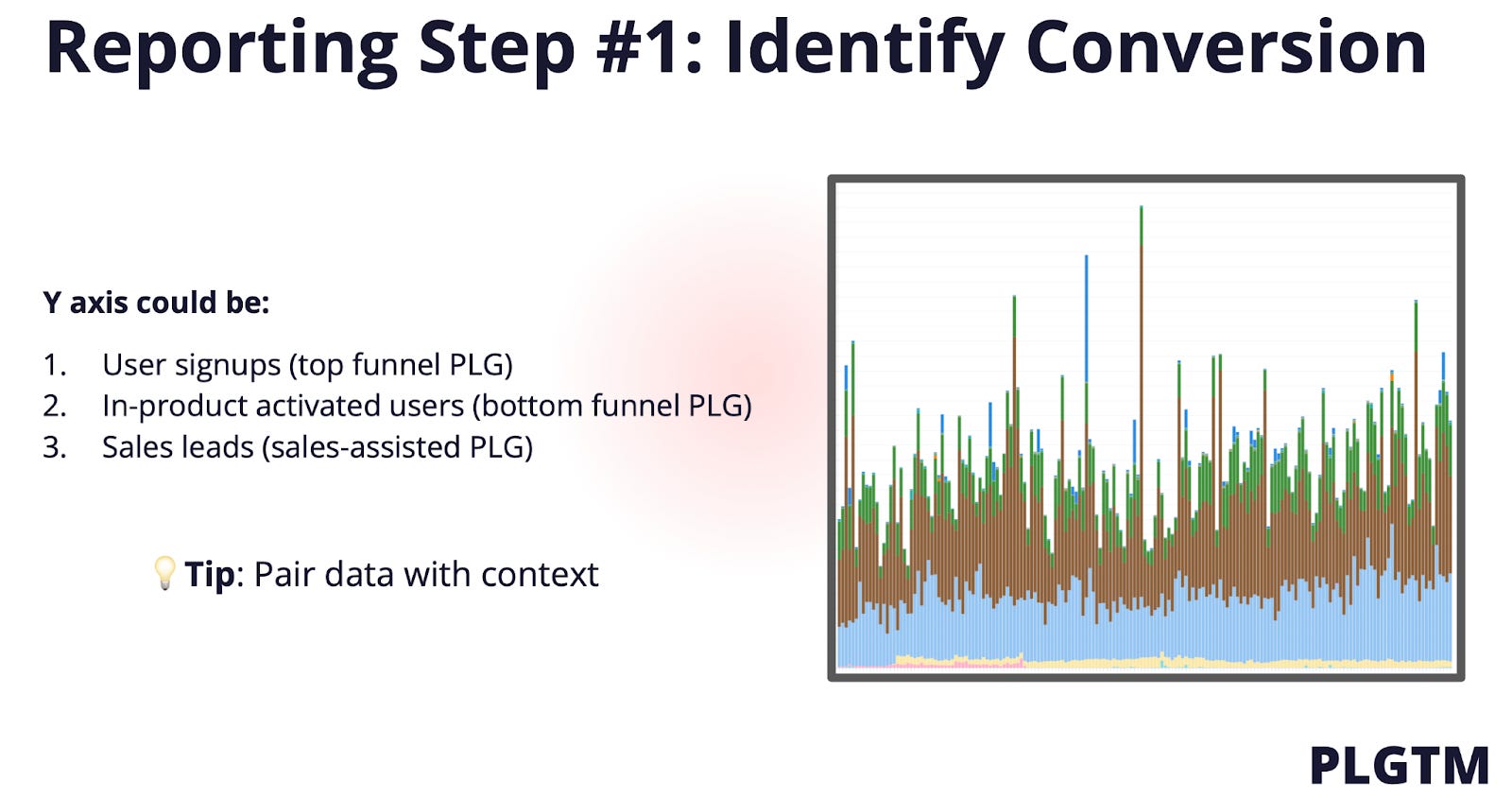
User Signups: Top-of-funnel PLG metrics.
In-Product Activated Users: Bottom-funnel PLG metrics.
Sales Leads: Sales-assisted PLG metrics.
💡 Tip: Pair data with context to give a clearer understanding of what drives conversions.
Step 2: Continuous Testing
Attribution isn’t a one-time setup; it requires ongoing testing to maintain accuracy.
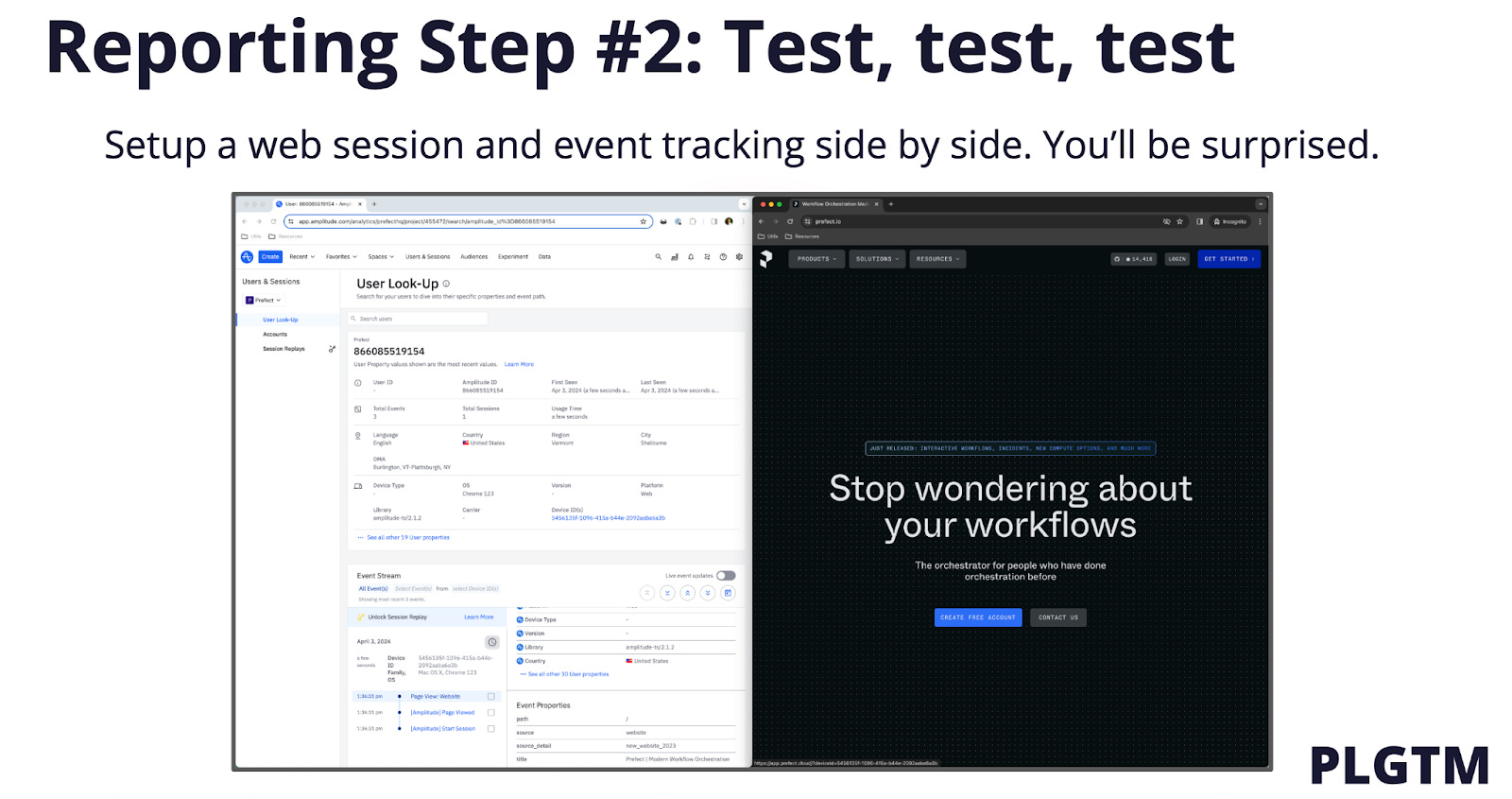
💡 Tip: Conduct side-by-side comparisons of web session and event tracking to catch discrepancies early.
Attribution is a powerful tool in a marketer’s toolkit, but it demands thoughtful implementation and ongoing refinement. By thoroughly understanding the why, what, and how of attribution, you can maximize your marketing effectiveness and drive sustainable growth.
PLGTM Summit 2025
The 2024 Summit was a massive success with over 230 joining us live. Excited to share that PLGTM Summit 2025 is happening again in San Francisco! Now 3 days long on May 13 - 15, 2025 with dedicated days for sales, marketing, and ops. Also new for 2025 is a dedicated executive track/offsite.
Tickets start at just $240 when you use code EARLYBIRD. See you there!
PLGTM Jobs
🆕 Multiple GTM roles | Open AI | Hybrid | USA
🆕 Multiple GTM roles | BILL | Hybrid | USA
Growth Marketing Manager | Podium | Hybrid | Lehi, UT
GTM Operations Manager, Expansion and Retention | Vercel | Remote | USA
Demand Generation Manager | SonarSource | On-site | Austin, TX
🚨Are you hiring for a GTM job in a PLG company? Fill in the form and we’ll feature your job post in the next PLGTM Insider newsletter.
Candidate Profiles
Subhashree Durai | Marketing | Remote or In-person | Chennai, India.
Christopher Haywood | Marketing | Remote | Barcelona, Spain.
Dave Reinke | Marketing | Remote or In-person | Spokane, Wa.
AJ Sedlak | Ops | Remote | Pittsburgh, PA.
Kacyn Goranson | Marketing | Remote | Denver, CO.
Cassandra Schwartz | Marketing | Hybrid | Seattle, WA.
🚨Are you looking for a GTM role at a PLG company? Fill in the form and we'll feature your profile in the next PLGTM Insider newsletter.